
A practical guide to choosing and hanging wall art
Artwork can completely change how a room feels. It brings personality, colour, warmth and scale, and can make a room feel finished without replacing the furniture or repainting the walls.
But good wall styling is not simply about finding an image you like. The size, position, colour, frame and relationship to the rest of the room matter just as much.
Here are the decisions to make before putting holes in the wall.
Start with what the room needs
Before shopping, ask what is missing from the space.
Does the room need more colour, warmth, height, texture or contrast? Does it need a stronger focal point? Or does it simply need something personal so it feels less generic?
You are not choosing artwork in isolation. You are choosing the right piece for a particular room and wall.
The artwork should connect to something nearby, such as the sofa, bed, sideboard, dining table, colours or materials. It does not need to match, but it should feel intentionally placed.

Choose the right size
The most common mistake I see is artwork that is too small.
As a starting point, artwork or a group of artworks should fill around two thirds to three quarters of the width of the furniture below it.
For example, above a 240 cm sofa, aim for approximately 160 to 180 cm of artwork or wall decor.
That could be:
One large piece
A pair or series
A gallery wall
A textile or tapestry
A combination of framed and sculptural pieces
Small artwork floating above a large sofa rarely looks minimal. It usually looks accidental.
Test the dimensions before ordering
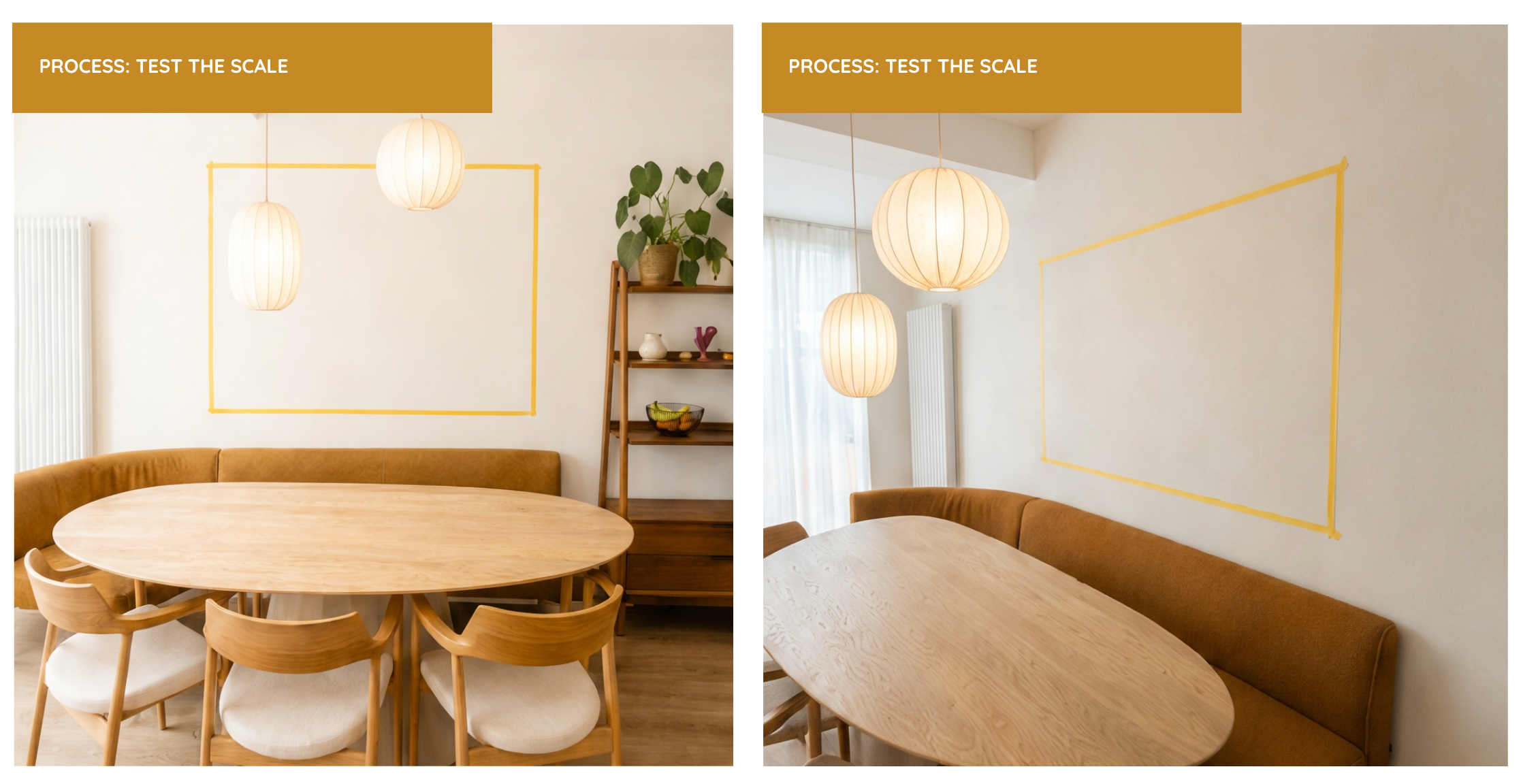
Use low tack painter’s tape to mark the full width and height of the artwork on the wall.
Leave it there for a day or two. View it from the doorway, the sofa and the main route through the room.
This is much more reliable than guessing from measurements on a website. A 50 cm print can sound generous online and look like a postage stamp once it arrives.
Most people go too small. When in doubt, test a larger option too.
Hang it at the right height
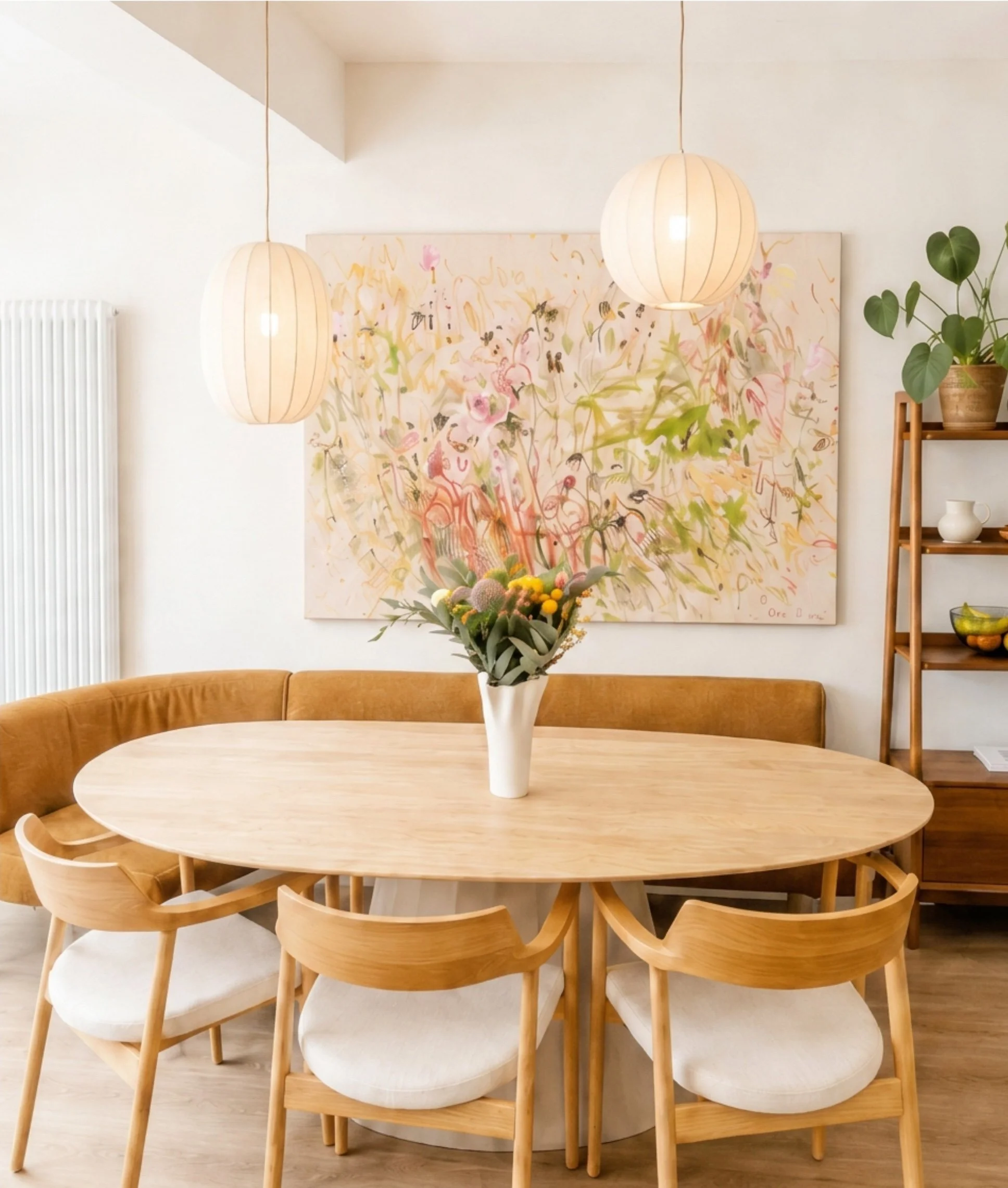
Artwork is often hung too high because people centre it on the wall rather than relating it to the furniture below.
As a general guide:
Position the centre of standalone artwork around 145 to 155 cm from the floor
Leave approximately 15 to 25 cm between furniture and the bottom of the artwork
Centre artwork over the furniture, not necessarily the entire wall
These are starting points rather than rigid rules. What matters is that the artwork feels connected to the room, rather than stranded between the furniture and ceiling.
Decide between one piece and a gallery wall
One large piece creates a calmer look and a clear focal point.
A pair or series works well when you want structure, symmetry or more width.
A gallery wall creates a more personal, collected feeling and allows you to combine prints, photographs, drawings and objects.
When hanging several pieces, treat the entire arrangement as one artwork. Keep the gaps consistent, usually around 5 to 10 cm, and establish a common thread through the frames, colours, mounts or subject matter.
Lay everything out on the floor first and use paper templates on the wall before making any holes.
Do not overmatch the colours
Artwork does not need to match every cushion, curtain and accessory.
Instead, look for something that:
Repeats one or two colours already in the room
Introduces contrast
Adds a warmer or deeper tone
Connects existing colours without copying them
Brings something new to the space
The artwork should belong in the room, but it should not disappear into it.
Think beyond framed prints
Not every wall needs another rectangular picture.
Consider mixing in:
Original paintings
Photography
Textiles or tapestries
Mirrors
Ceramics or decorative plates
Wall sculptures
Framed fabric
Children’s artwork
Personal photographs
Objects collected while travelling
Different materials and shapes can make a room feel more layered and considered.
Choose the frame carefully
The frame is part of the finished piece.
Light timber adds warmth, black gives contrast, white feels lighter and vintage frames bring character. Frames do not all need to match, but the combination should look intentional.
A generous mount and larger frame can also give a small photograph, illustration or drawing much more presence.
Check the lighting
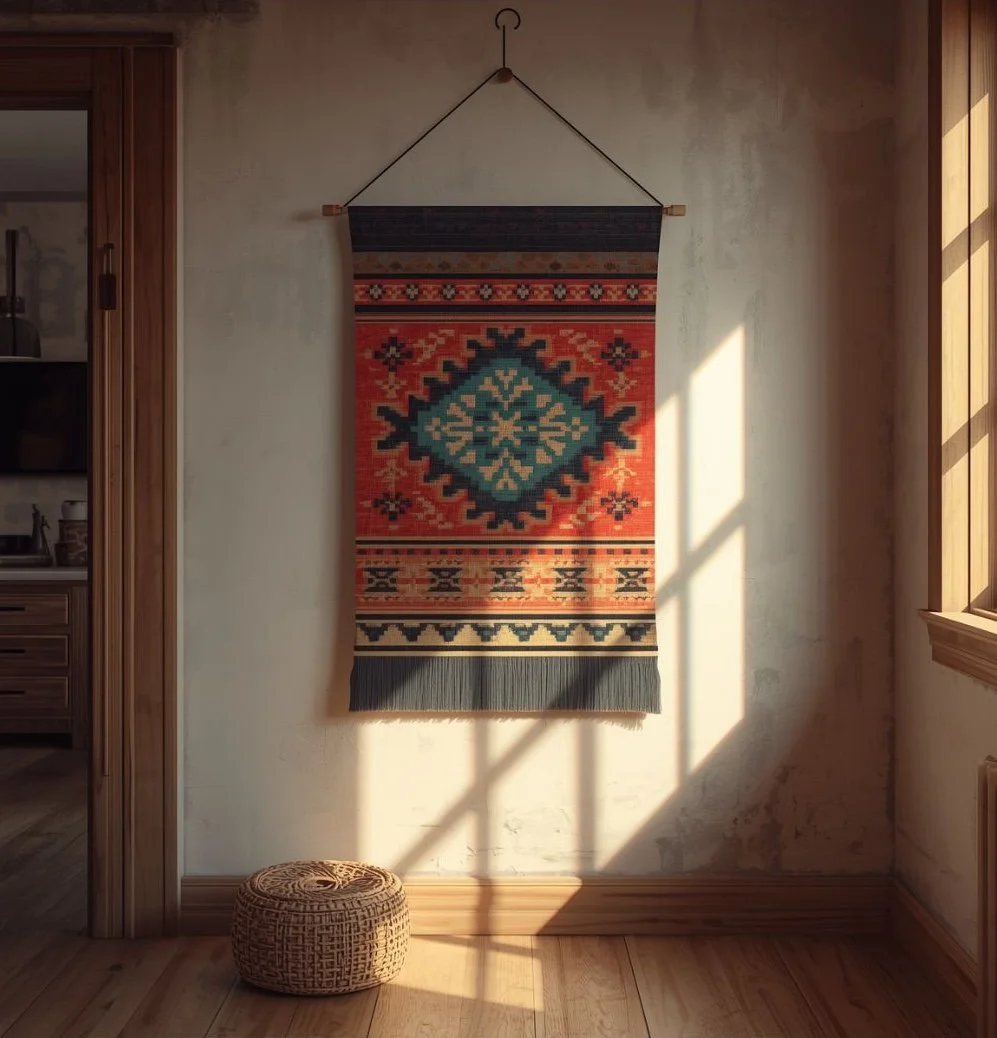
Look at the artwork both during the day and after dark.
Consider whether it receives too much direct sunlight, whether glass reflects a window or whether the piece disappears in the evening.
A picture light, directional spotlight or nearby lamp can make the wall feel properly integrated into the room.
Do not fill every empty wall
Empty space is not automatically a problem.
Sometimes a room needs art. Sometimes it needs a mirror, texture, lighting or nothing at all.
Before adding more, edit what is already there. Several unrelated small pieces may be more effective grouped together, while one stronger piece may make the whole room feel calmer.
Before you buy
Ask yourself:
Is it large enough?
Does it relate to the furniture below it?
Have I tested the dimensions on the wall?
Is it likely to be hung too high?
Does it add something the room is missing?
Does the frame suit the room?
Will it work after dark?
Would one larger piece be stronger than several small ones?
Am I choosing it because it belongs here, or simply because the wall is empty?
The right artwork should not look as though it has been used to fill a gap. It should look as though it belongs there.
Looking for somewhere to purchase your art work? I've created an Art and Wall Decor Directory for recommended places to find prints, original art, textiles and more sculptural pieces across a range of budgets in the Netherlands and wider Europe.
