
The 3 Layout Steps You Need To Transform Any Room in Minutes
I love a good room-refresh—it breathes new life into our everyday routines and makes home feel exciting again. But before you start moving sofas or hunting for that perfect accent chair, let’s talk about the three non-negotiable layout essentials that will set you up for success. Achieve these, and every styling choice you make afterward will land with intention.
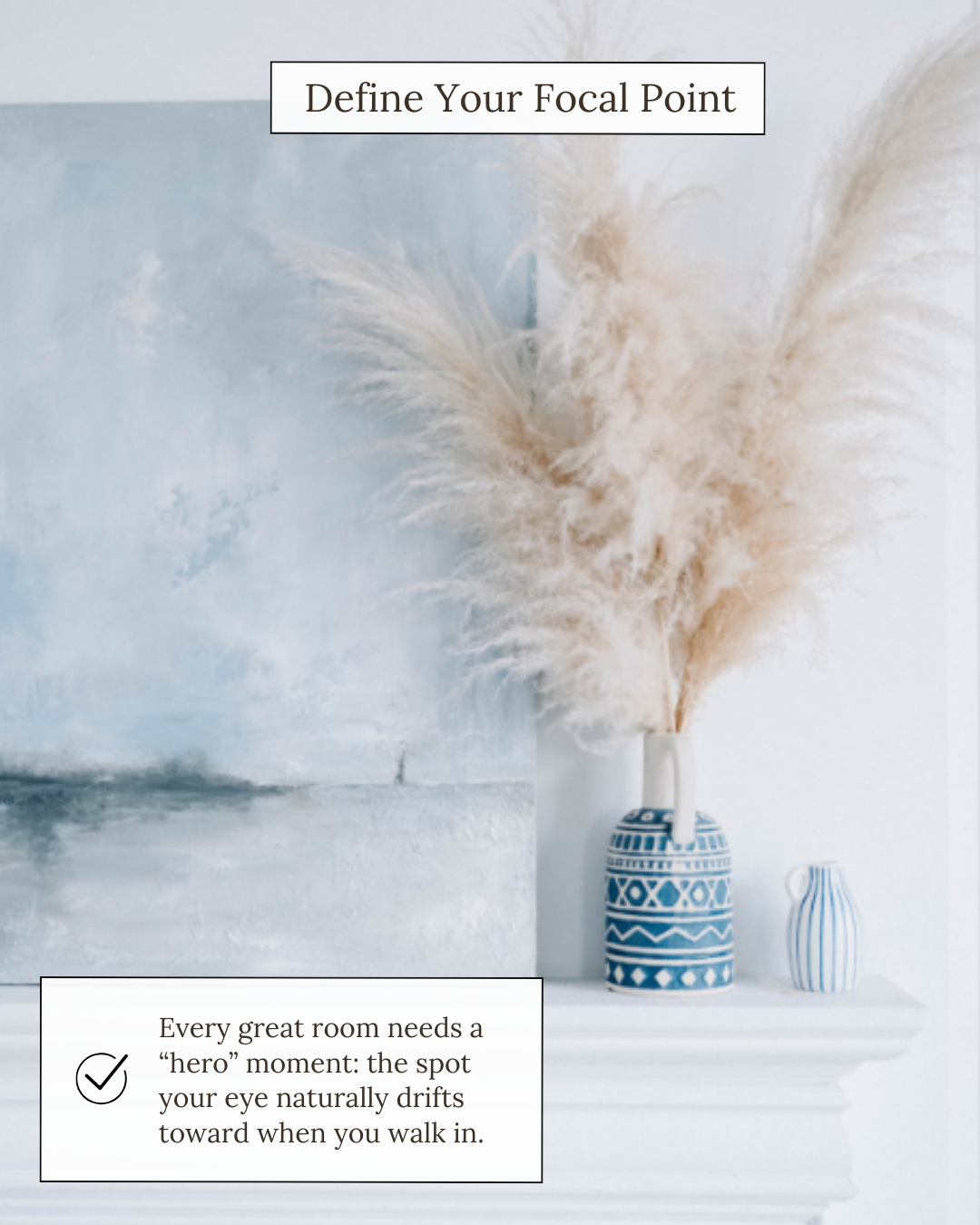
1. Define Your Focal Point
Every great room needs a “hero” moment: the spot your eye naturally drifts toward when you walk in. It might be the fireplace, a large window, a media console, or even a dramatic piece of art.
Why it matters:
A clear focal point gives your furniture a purpose. Instead of arranging pieces in a default box-in-the-middle layout, you’ll orient seating and accents so they point toward that hero moment—creating a sense of cohesion and flow.
How I do it:
Identify your room’s strongest architectural or decorative feature.
Position your largest piece of furniture (sofa, console, or bed) to face or frame that feature.
Layer secondary seating, tables, and rugs so they subtly direct attention back to the focal point.
2. Measure & Map Your Traffic Flow
A beautiful arrangement means little if it blocks the natural pathways you and your guests use every day. Avoid the frustration of “sidestepping” around coffee tables or squeezing past chairs.
Why it matters:
Good traffic flow keeps a room feeling open and welcoming. It respects how people actually move through the space, preventing accidental tripping hazards and making your layout feel intuitive.
How I do it:
Grab a tape measure and note key walking zones: doorways, pathways, and entry points.
Sketch a quick floorplan on grid paper or use a free online tool to place scaled furniture shapes.
Ensure you leave at least 60–90 cm of clearance in all main walkways.
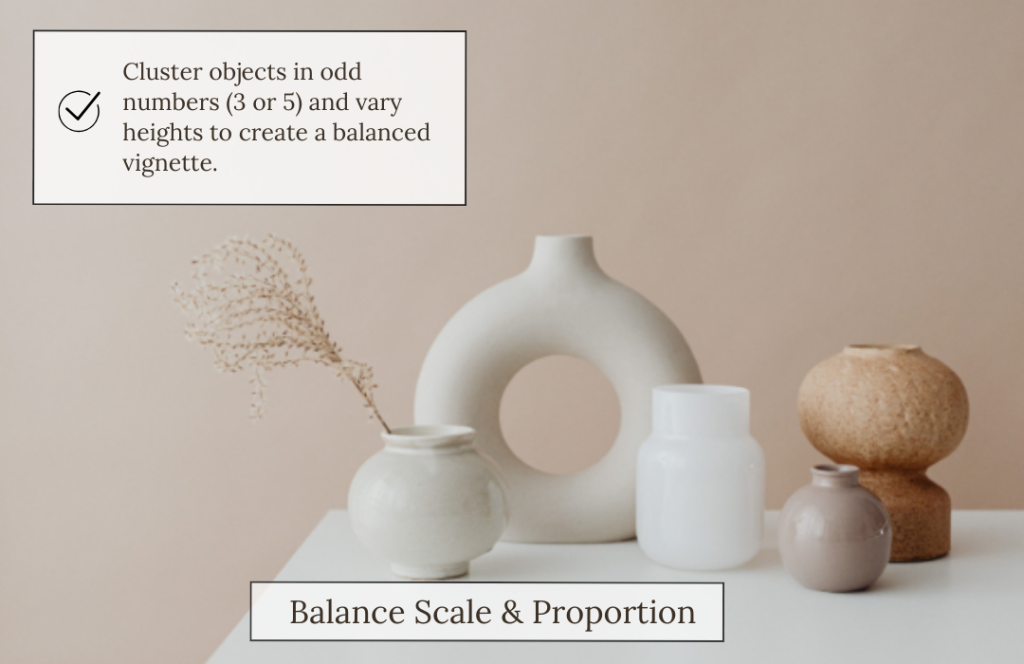
3. Balance Scale & Proportion
It’s tempting to cram every beautiful piece you own into one room—but mismatched scales can feel chaotic. Petit tables next to a large sofa look lost; Large sofas in a small room feel awkward.
Why it matters:
When scale and proportion are balanced, your eye glides effortlessly across the room. Each piece “fits” its space, and the overall effect feels harmonious—never jarring.
How I do it:
Rugs: New rule of thumb: Allow at least 30 cm of bare floor between the rug’s edge and each wall. This “frame” effect makes even a modest rug look intentional and ensures your furniture feels grounded without the rug dominating the room.
Furniture Heights: Pair low sofas with mid-height side tables; reserve tall pieces (bookcases, armoires) for ample wall space.
Accessory Grouping: Cluster objects in odd numbers (3 or 5) and vary heights to create a balanced vignette.
Bringing It All Together
Start by sketching a simple layout: mark your focal point, map your walkways, and plot furniture to scale. Make adjustments on paper (or in your digital tool) until the flow feels right. Then, move your key pieces into position—rugs first, then sofa, then tables and chairs. Finally, add accents and soft furnishings to soften the edges and inject personality.
A well-planned layout is the backbone of every stunning room refresh. Once you’ve got these three essentials in place, styling with color, texture, and accessories becomes not just easier, but truly impactful.
Got a specific styling question?
Book a 15-minute “Style Check” call with me, and let’s tackle it together. Schedule here
